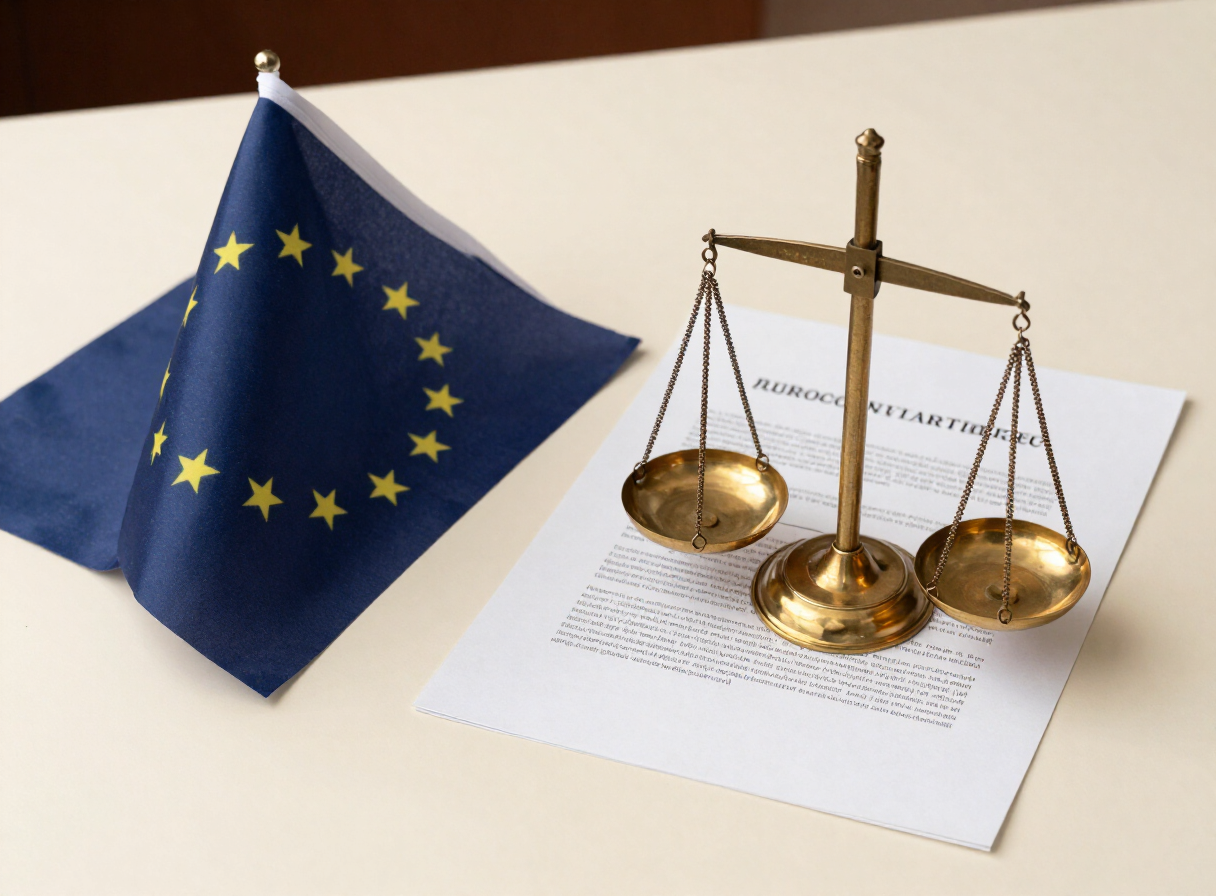
European countries operate one of the most harmonised cross-border divorce systems in the world through EU regulation — but that harmonisation stops at the EU's external border. This guide explains how EU divorce jurisdiction works and what it means for Indian recognition.
EU Regulation 2201/2003 (Brussels IIa) and Its Successor
EU Regulation 2201/2003, known as Brussels IIa (subsequently recast as Regulation (EU) 2019/1111, applicable from August 2022), harmonised rules on jurisdiction, recognition and enforcement of matrimonial and parental-responsibility judgments among EU member states. Under this framework, a divorce granted by a court in one member state is automatically recognised in every other member state without a separate exequatur proceeding, based on shared jurisdictional grounds such as habitual residence or joint nationality of the spouses.
Why This Harmonisation Does Not Extend to India
Brussels IIa and its successor operate strictly within the European Union; India is not a party and receives no automatic recognition benefit from a European decree. A divorce obtained in, say, France or Germany must be independently assessed under Indian private international law and Section 13 of the Code of Civil Procedure, 1908, exactly as any other foreign decree — the fact that it is freely recognised across the rest of the EU carries no special weight before an Indian court.
None of the major continental European jurisdictions have been notified as "reciprocating territories" under Section 44A CPC either, meaning European decrees generally require the same fresh civil suit route in India as US, Australian and Canadian decrees.
Mutual Legal Assistance and Diplomatic Channels
Where formal treaty recognition is unavailable, families often rely on mutual legal assistance frameworks and diplomatic or consular channels — for instance, to serve process on an Indian-resident spouse in a European proceeding, or to authenticate documents through apostille under the Hague Apostille Convention, to which most EU states and India are parties. This channel supports procedural cooperation but does not itself confer automatic recognition of the resulting decree.
Case Law Bearing on Cross-Border Recognition
Smt. Neelam Katara v. Union of India (Supreme Court, 2006) — citation not independently verified
While arising from a criminal matter concerning witness protection, this Supreme Court ruling is frequently cited in cross-border family litigation for its broader articulation of the state's duty to ensure a fair and effective process for parties, including vulnerable spouses navigating parallel or foreign proceedings — a principle Indian courts draw upon when assessing whether a foreign decree was obtained through a fundamentally fair process.
Priya Sharma v. Rajesh Sharma (Delhi High Court, 2019) — citation not independently verified
The Delhi High Court considered a matrimonial dispute with a European connection, holding that the mere existence of a foreign decree recognised across an entire regional bloc does not relieve the party relying on it in India from independently satisfying the Section 13 CPC conditions, including proof of proper notice to the Indian spouse and the absence of any public policy conflict. Book a confidential consultation with Advocate Shailender Singh in Lucknow.
Need legal help in Lucknow?
Speak with Advocate Shailender Singh.
Confidential, experienced representation before the Allahabad High Court (Lucknow Bench), Family Court and UP-RERA. Discuss your matter today.